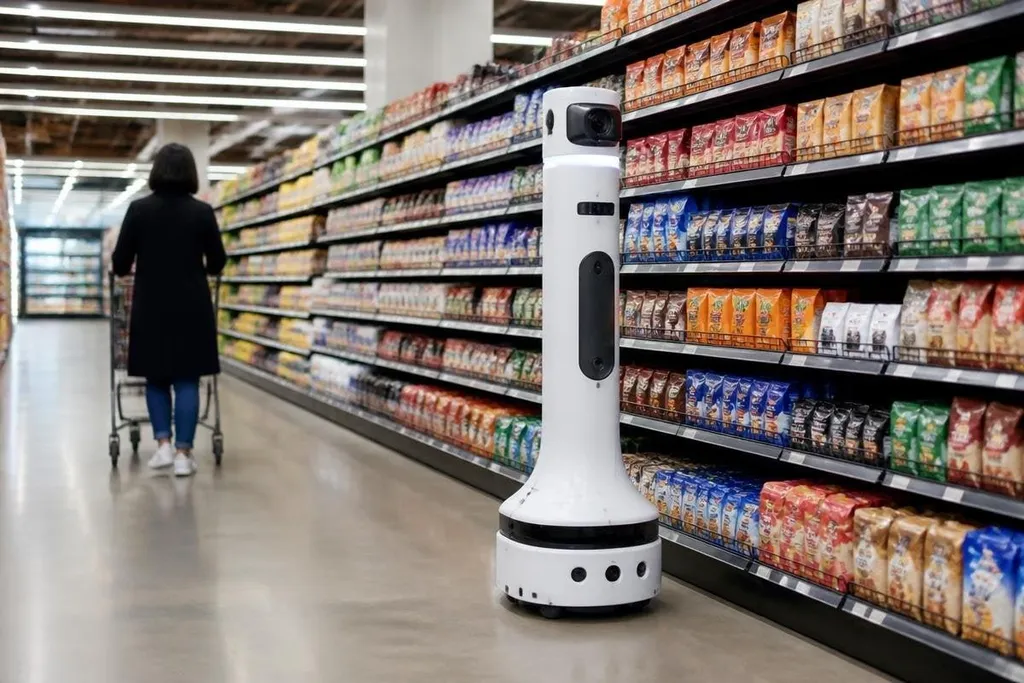
A supermarket robot usually starts with one narrow job: check shelves, move goods, clean floors, or help prepare online orders. The change for store managers is practical. Work shifts from repeated walking and checking toward handling exceptions, maintaining equipment, and keeping people safe around moving machines.
Quick read
- Shelf robots can spot gaps, but staff still decide what to do next.
- Store robots need clear routes, safe handoffs, and regular checks.
- The useful question is the task they remove, not the robot’s shape.
Shelf checks become a data task
A robot with cameras can travel along an aisle and record what it sees. Software can compare that view with the shelf plan, then flag an empty space, a misplaced product, or a row that needs attention.
That changes the timing of the work. A worker does not need to walk every aisle on a fixed schedule just to find out which shelves need help. They can start with the locations the robot has marked, then confirm the result in person.
The machine still has limits. Products may hide behind one another, packaging can look alike, and a crowded aisle can block the camera. A shelf report is useful when it sends a worker to the right place; it is weak when staff must check every result from the start.
A store trial needs more than a polished clip. Robotics reporting from Robot24.com can put the named machine, store, task, and measured result beside a shelf-scanning claim. The next test is behind the shelves, where goods still need to move.
Moving goods changes the back room
Small mobile robots can carry boxes between a delivery area, a storage room, and the shop floor. In that setup, the robot handles repeated trips while staff load, unload, and check the goods.
The route matters more than the top speed. A supermarket has narrow aisles, swinging doors, shoppers, carts, and people carrying stock. The robot must stop when its sensors detect an obstacle, wait for a clear path, and resume without losing its place.
This work also changes the back room. Staff need marked drop-off points, charging space, and a way to report faults. If a robot stops beside a fire exit or blocks a delivery route, the store has gained a machine and lost usable floor space.
Online orders put pressure on picking
A store that fills online orders has to find products, collect them, check substitutions, and take the bags to a handoff point. Robots may carry the basket, guide a worker through the store, or move finished orders inside the building.
The hard part is product variety. A robot can move a box with a known shape more easily than it can pick a soft bag, a loose item, or produce that differs from one piece to the next. The handoff between robot and worker needs a clear rule, especially when an item is missing or damaged.
That makes task choice important. Carrying goods may work with less setup than asking a robot to pick every item. A store manager should measure the time spent walking, waiting, and fixing errors before choosing a system.
Cleaning and safety need daily checks
Floor-cleaning robots can follow mapped routes and work during quieter periods. Their value depends on the floor plan, the time available, and how staff respond when the machine meets a spill, pallet, or customer.
A robot that works near shoppers needs visible warning lights, safe stopping behavior, and a clear emergency procedure. Workers need to know where to stop it, how to move it, and what to do when its map no longer matches the store.
Safety is part of the job design. Store staff, robot suppliers, and managers must agree on routes, handoffs, and maintenance before a machine runs near the public.
A practical test before buying
Use these checks when a supermarket robot moves from a demo to a store plan:
- Name the task: Write down the repeated work the robot will do and the person who handles exceptions.
- Map the route: Mark doors, shelves, exits, charging points, and places where shoppers gather.
- Count the handoffs: Record when staff load, unload, confirm, repair, or redirect the robot.
- Set a stop rule: Define the fault that pauses the robot and the person who can restart it.
- Check the floor plan: Test the machine after displays, pallets, and seasonal stock change position.
- Measure the work saved: Compare walking time and error handling before and after the trial.
I'd judge a supermarket robot by the staff time it removes from a defined task, not by how much of the store it can visit.
The next useful step is a small trial with one route and one named task. If workers spend more time correcting the robot than doing the old job, the store has a clear answer: change the task, change the setup, or leave the robot out.